

What I Learned in 32 Weeks of Ericksonian Hypnosis Training
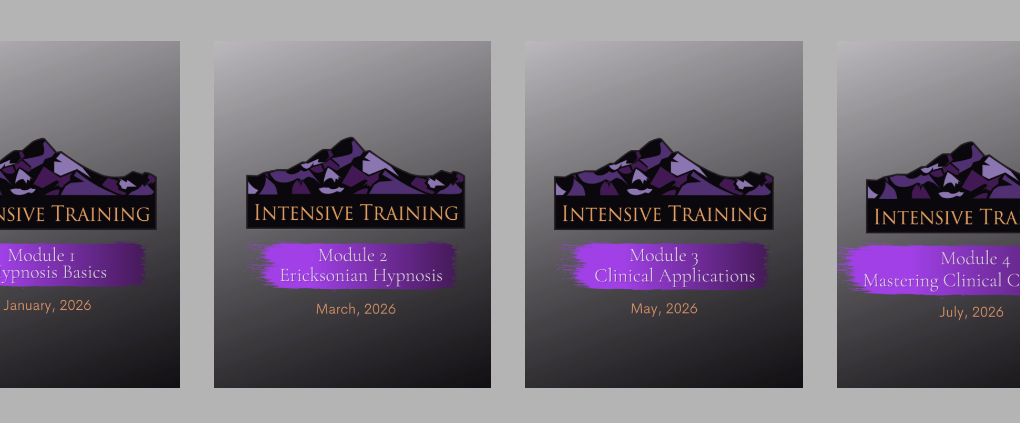
Table of Contents
Four modules, thirty-two sessions, and the parts I am still using.
Last week, I completed the final session of the Milton H. Erickson Foundation’s 32-week Intensive Training. Four modules, eight sessions each, spread across eight months, ending with Mastering Clinical Challenges.
I went in as an NLP Master Practitioner and a career coach who writes software for a living, and I expected to come out holding more techniques than I went in with. That is not quite what happened. This is a note about what did.
One boundary before anything else. I am a career coach, not a therapist. What I took from this training is a stance toward how change happens, applied to careers, working patterns, and the models people carry about their own competence. I am not importing clinical work into coaching, and there is no treatment claim anywhere in this article.
I should also say that nothing from the training appears here word for word, and details from the live work are kept deliberately general. The sessions involved real people, and describing what I learned does not require reproducing what anyone said or disclosed.
Why I Was There in the First Place
Much of what I already practiced is downstream of Milton Erickson, whether or not it says so on the label. NLP was built in significant part by modelling him, and NLP is where I learned most of it. I had been working with the descendants for years without spending much time with the source.
So the honest answer is that I went looking for the original of something I already used. What I did not expect was how much of the training would be about watching, rather than about doing.
Michael Yapko, and a Question With No Answer
The session I think about most was a live one, working with a man who described himself as stuck under an inner critic he could not get out from under.
I was watching, and I was waiting for the intervention I would have made. Weaken the critic, then build something more useful in its place. Instead Yapko asked him how he knew whether he should pay attention to the thought when it arrived.
He had no answer. Yapko came back to the same question later in the session, and there was no answer the second time either.
That seemed to become the question the rest of the session was built around. Not the history, not the content of the critical voice. What Yapko seemed to identify was the absence of a reliable way to decide which thoughts deserved attention, and everything that followed sat on top of that.
The work that followed did not aim at the voice at all. It aimed at his capacity to tell the difference between the times it was worth listening to and the times it was not. There are moments when an internal warning is accurate and you should stop. There are moments when the same warning fires on old evidence and costs you something real. From the inside those two moments feel nearly identical, and that similarity is the actual problem.
Two reframes carried most of the weight. The first was that everyone has an inner critic, and the difference between people is not whether they have one but whether they listen to it. That single move takes someone out of the broken category and puts them in the missing-a-skill category, and those two categories lead to completely different work. The second was shorter, and it was that not every thought is golden.
The metaphors stayed with me longer than the techniques did. A volume knob. A dog tied to a tree. A wall between then and now. A light acknowledgement offered to the critic, warm enough that it landed as a joke rather than as a fight.
Read as a set, not one of them removes anything.
Every one of them changes a distinction instead. Louder or softer. Near or far. Then or now. Worth the floor or not. They hand someone an axis they did not previously have, and once you have an axis you can locate yourself on it.
The part I did not expect was the vocabulary. Yapko introduced almost none of his own. The man arrived with a handful of images for what was happening to him, and those images are what the session got built out of. Each one came back later, intact but turned, so that the same picture now described a different relationship to the same experience. An image of being trapped came back describing a choice. An image of things attaching themselves to him came back describing things that pass by without catching.
I had been trained to bring the better description with me. Find the unhelpful frame, supply a more useful one, install it. Watching someone build an entire intervention out of the other person’s own words made my version look expensive by comparison, and slightly presumptuous.
What I took from it: assess the discrimination before reaching for the intervention, and build with the language already in the room rather than the language I brought.
Rob Staffin, and the Question I Was Asking Wrong
Rob Staffin taught the third session of the first module, on experiential inductions, and he took apart an assumption I had carried in with me without ever having examined it.
He described reading Erickson early in his own training and hitting the same wall I had hit. Erickson writes that he induced a trance, and the obvious next question is how. But that was not what Erickson was writing about. He was writing about what to do with the state once someone is in it. The how was treated as assumed knowledge, which is fine for him and useless for a reader who does not have it yet.
Then Staffin mentioned a paper by Sid Rosen whose title promised a thousand and one hypnotic inductions. He said the essence of it was that anything you can focus attention on can serve as the basis for one. Not a thousand and one methods to memorise. One principle with unlimited surface area.
I had been building a collection. That sentence is what started making the collection look like the wrong kind of asset, and it is not that the individual methods are worthless. It is that I had mistaken the inventory for the skill.
He also prefers the word elicitation to induction, and his working definition is that it is the process by which one assists themselves or another to shift into a different mode of experiencing. The phrase carries its own weight. Nothing is being done to anybody, and the person can be doing it for themselves.
The part I found genuinely useful was the function. The aim, following Jeff Zeig, is to cultivate a responsiveness to minimal cues. His illustration was small and precise. You say something about looking ahead to a time when the situation is behind them, and you watch for a slight lift of the head, a look off toward the distance. Nobody asked for that movement. And once you see it, the elicitation is finished. It has a completion condition, and the other person supplies it rather than your script.
Afterwards he walked back through the exercise questions and showed what each one had quietly assumed and what each had made the person do. Asking someone where a remembered place is sends them into their own experiential history in order to answer. The question was already the intervention. He put it plainly, that you are constantly moving between assessment and intervention, and I had been holding those apart as separate phases.
What I took from it: there is no catalogue of methods I can finish learning, and the work has a completion signal I do not generate myself. I know something landed because the other person shows me, not because I reached the end of what I had planned to say.
Dan Short, and Teaching by Demeanor
Dan Short taught a great deal of the groundwork, the sessions where you find out what hypnosis actually is before anyone shows you anything clever being done with it. He was very good at that, and I think foundational material is harder to teach well than the exotic material, because there is nowhere to hide in it.
The thing I took from him, though, was not any particular piece of content.
It was his manner. He taught through how he was, continuously, whether or not that happened to be the subject. His voice moved constantly, in rate and in pitch and in where he seemed to place it, precisely enough that the effect survived a webcam and a call with people scattered across a dozen time zones. I have spent years of my working life on video calls, so I know how flat that medium is. My repeated impression during his sessions was that he was looking directly at me, which he plainly was not. He was looking into a camera, like everyone else.
His communication with the students was unusually warm, and the warmth did work rather than just being pleasant. People asked worse questions, in the good sense. The half-formed ones you only risk when you are reasonably sure of the room.
I cannot say how much of that was deliberate, and I am not going to guess. What I can say is that in a training about how communication actually operates, the person teaching the basics spent most of his time demonstrating the material rather than describing it, and the demonstration is what I retained.
There is a Turkish way of putting this that I have not found a clean English equivalent for. Teaching through one’s state rather than through one’s explanations. That is what I watched him do.
What I took from it: the state you teach from is part of what gets learned, and warmth is not decoration around the instruction. It is a working condition that makes certain questions possible in the first place.
Lilian Borges, on Tailoring
Lilian taught the session on tailoring, and she came to it having spent ten years teaching Erickson’s work to doctors in Brazil before moving to the United States.
Her core point is easy to say and hard to do. The task is to fit the therapy to the patient, not the patient to the therapy. She was blunt about the alternative, which is that a great many approaches quietly force the person to fit the theory, a Procrustean bed with better branding. In coaching, the equivalent for me is simple: fit the conversation to the person, not the person to my model.
In practice this meant working from what the person already had. Their hobbies. Their values. The things they described as important. If someone cycles, the imagery comes from cycling. If someone gardens, it comes from the garden. The point is not decoration. It is that the person recognises themselves in it, and stops having to translate.
The line I wrote down came near the end. Someone had asked her how she translates Ericksonian teaching into other languages, and she said she does not translate the words. She translates processes. She translates dynamics. She translates emotions. What a particular cultural experience looks like changes completely between Brazil and China, but the experience of growing, or of seeing something differently, does not.
She demonstrated that claim later in the same module, in her session on utilization, and I did not see it coming. She had brought a colleague from the Foundation along as her subject for the day. Before starting she checked whether the woman spoke any Portuguese, which she did not, and then whether she had any Spanish, which came to a word or two. Lilian ran the whole induction in Portuguese anyway.
The response came regardless, in front of forty people watching on video. Nothing that carried it was operating at the level of meaning. It was tempo and volume and tone, the length of the pauses, and one Portuguese phrase repeated as an anchor with her voice dropping lower on each return. She was careful afterwards about what she had and had not shown. This is a teaching demonstration, she said, not something she does in practice, and she does not induce trance in Portuguese even with her Portuguese speaking patients. What she uses with them instead are the sounds already living in their own language, the lullabies and rhythms they grew up inside. She also noted she did not invent this. Erickson did it, and Gilligan runs the same demonstration using invented gibberish rather than a real language, which if anything makes the point harder to argue with.
What I took from it: the words are not the payload. Whatever is actually doing the work survives translation, and if I cannot say what that is for a given conversation, I do not understand the conversation yet.
Dana Lebo, and How Fast You Come Back
Dana Lebo taught the opening session of the third module, on hypnosis and performance enhancement. She works with leaders, veterans, elite athletes, writers and students, and she combines hypnosis with sports psychology and executive coaching. She is also a marathoner and a triathlete, so when she talks about what happens at the eighteenth mile she is not speaking theoretically.
She started with the situation every performer recognises. A tennis player double faults and starts spiralling. A musician makes a mistake and freezes. A speaker loses the thread and panics. What makes this hard is the clock. You have to recover in seconds rather than minutes, because the performance is still going on around you.
Then she brought in the adversity training model from Gangyan Si, a sport psychologist at the Hong Kong Sports Institute, and that is the part I have not stopped turning over. The older approach was to train athletes to reach peak performance and stay there. The problem is that too much goes wrong during competition for that to survive contact with an actual event. What Si observed in elite performers is that they do not only chase the zone. They learn to coexist with adversity. The mark of an elite performer is not how rarely they fall out of it. It is how quickly they find their way back.
I read that as an availability metric and I have not been able to unread it. We spend enormous effort on lowering the frequency of failures and comparatively little on shortening recovery, in systems and in ourselves, and it is the second number that decides what the experience is actually like to live through.
Her tool for the way back is the BAR, the Breath Attention Reset, and it comes in two halves.
The breath half I expected to be ordinary and it was not. The physiology is simple enough, in that inhaling speeds the heart and exhaling slows it, so an exhale roughly twice the length of the inhale, somewhere around four counts in and eight out, moves the nervous system out of alarm. What makes it worth describing is the instruction for the inhale. Drawing on affect labeling research and on an adapted Tibetan practice, you name the disruption in specific words and then breathe it in. Not past it and not around it. In. Then you name its opposite and breathe that out, slower and complete.
That is the same refusal I had already run into in Gilligan’s module, arriving from a completely different direction. You do not get rid of the thing. You take it in and send something else back.
The attention half was new to me. When a performance breaks, attention turns inward, into self monitoring and self criticism and a running commentary on your own mechanics. The research she cited holds that internal focus actively disrupts automatic movement, in the way that thinking about each individual step will make you clumsy on a staircase you have come down a thousand times. The correction is not to monitor more carefully. It is to look outward and lock the gaze onto something specific and external, a particular detail rather than a general direction, which the literature calls the quiet eye. Then to picture the effect your action creates out in the world rather than picturing your own body producing it.
What I took from it: recovery time is the number that matters, and the way back is not sharper self monitoring. It is a longer exhale and a fixed point outside yourself.
Roxanna Erickson-Klein, and Who Carries the Responsibility
Roxanna Erickson-Klein taught learning and teaching self hypnosis, and it is the session that moved the most for me, because it was not about doing something well. It was about handing it over.
She set the two arrangements side by side. In the guided version, the one most people picture when they hear the word hypnosis, one person leads and another follows, and the person leading carries a long list. Safety. What to do when the state wavers. What to do if something difficult surfaces. Interruptions. Coming back out. The conversation afterwards.
Then she moved the whole list to the other side of the table.
In self hypnosis the person carries every item themselves. The preparation, the intention, the choice of when and where, the way in, what happens when the phone rings, the way back out, and the judgment about whether any of it did what they wanted. Nothing on that list disappears when the guide leaves the room. It changes owner, and that is a different thing entirely.
She was equally clear that the way in cannot be prescribed. A person practising on their own has to find their own route, and the teacher does not get to supply it. What the teacher can supply is the scaffolding around it, which in her case meant a short set of questions asked before any technique is taught at all. What do you want to use this for. Will you actually practise. When and where. How will you know it worked. Only after those does the method become worth discussing.
One smaller moment inside the same session stayed with me for different reasons. Anchors are part of what she teaches for self hypnosis, a cue a person deliberately sets for themselves so they can find their way back to a state without help. When she reached the term she stopped to place it. Anchoring, she said, was popularized by NLP, so she had gone through her father’s collected works to see whether he ever used the word “anchor.” He had not. The single occurrence she found was in The February Man, published after his death and co-authored with Ernest Rossi, and she thought the word was probably Rossi’s. Then she added the part that mattered, which is that not having the word back then takes nothing away from what anchoring is.
I had half expected to spend eight months picking a side between the two traditions. Nobody in that training asked me to.
The piece I have thought about most since is what she said about talking it over afterwards. Going straight into an analysis of the experience can interfere with what is still settling, so the debrief is not automatically a good idea. She had a phrase for it that stuck: do not shake the jello.
Her comparison was to a dream. The moment you begin describing it, and deciding which parts to write down so you will not lose them, is roughly the moment it stops being available to you. So if someone is still somewhere in between, and it is safe, you can leave them there a while. The safety clause is not decoration. If that person is about to walk out and drive a car, you bring them all the way back, and the preference for letting things settle does not get a vote.
For someone practising alone there is no debrief to hold off on, so the check moves later and gets narrower. Some reasonable interval afterwards you ask what you set out to do and whether you got near it, and you answer honestly.
What I liked was discovering a module later that this is not settled among the people teaching it. In Dan Short’s session on feedback someone asked about exactly this, and he named her directly. Roxanna prefers not to shake the jello, he said, she thinks things need time to settle, and she will almost always put a distraction in right afterwards. His own practice is different. It is not a routine for him, it depends on the person in front of him, because some people are visibly bursting to talk about what just happened and others clearly would rather not. He also pointed out that you can simply ask while the person is still in it whether they want to carry the experience out with them or leave it where it is.
Neither of them was describing a rule. They were describing a read of the person in front of them, which is the part that does not compress into a protocol.
What I took from it: teaching someone to do something without you is a different job from doing it well alongside them, and the responsibilities do not evaporate at the handover. They transfer, whether or not anyone names them.
Stephen Gilligan, and the Problem With Removal
Gilligan came in near the end, in Module 4, teaching generative trance.
He lays out four generations of trance work, and the first one is worth repeating because it is where a lot of people’s mental image of hypnosis still lives. In the oldest tradition the conscious mind is treated as an idiot and the unconscious is treated as an idiot, so you take a hammer, knock the person out, and tell them what to do. Erickson broke with that and regarded the unconscious as carrying real wisdom. Gilligan’s own work goes further, into generative trance, where the aim is a conversation between the two rather than one of them being bypassed. The fourth generation, which he calls creative mind, goes further still.
Laid out that way it is a version history. Each generation keeps what worked in the last one and changes what it assumes about the person sitting in the chair.
Then he set a rule I could not find my way around. When someone states what they want, he does not accept a removal. If the answer is that they just want to get rid of something, that is not an admissible goal. The intention has to be positive, and it has to be five words or fewer. Not the absence of something. The presence of something.
I made the objection silently at the time. Sometimes people genuinely want a thing to stop, and being told that is not a valid request sounds like a technicality. But watch what the rule does. It forces someone to name what they are moving toward, and a surprising number of us have never done that. “Stop being anxious” contains no destination. It only names what we are running from.
His account of what makes something a problem is the piece I have used most since. Roughly: the problem is not that a person has the pain, or whatever the symptom happens to be. The problem is that when they go into it, they disconnect from every other part of their life. That disconnection is what turns it into a problem.
So the work is not removal. It is getting the rest of the person’s life back into the room alongside the difficulty, so the difficulty stops playing solo.
He is also blunt about the ceiling. You are never going to be problem free. It is one thing after the next. A year ago that would have read as defeat. It reads to me now as the most honest sentence anyone said across thirty-two weeks.
What I took from it: stop accepting removal as a goal, mine or anyone else’s, and treat isolation as the thing to work on rather than the difficulty itself.
What I Am Taking Into My Work
I do two jobs, and this training changed both of them, which I did not anticipate.
As an engineer, the transfer was not to my code. It was to my debugging. I notice now how fast I convert an unexpected behavior into a defect report, in systems and in conversations with the people who build them. When a team keeps doing something that looks irrational from outside, my first question used to be what is wrong here. It is now what conditions made this the reasonable thing to do.
Gilligan’s point about disconnection has a close analogue that I would put in front of anyone who has run an on-call rotation. A single alert firing is not an incident. It becomes one when it takes the whole dashboard and every other signal drops out of view while you chase it. The alert did not get louder. Your context got smaller.
Lilian’s tailoring changed how I run design discussions. I used to arrive with my framing and work to get everyone onto it. I now spend the first part of the conversation collecting the words the team already uses for the problem, because those words carry their actual model, and a proposal built out of their language gets tested on its merits instead of on whose vocabulary won.
Dan Short’s lesson shows up somewhere less comfortable, which is code review and mentoring. I have written review comments that were technically correct and left a junior engineer quiet for a week, and the correctness was never the problem. The state I wrote them from was.
Rob Staffin’s completion condition changed something smaller and more frequent. I used to treat an explanation as finished when I got to the end of it. Now I wait for the signal that it landed, which is usually a question that could only have come from someone who actually followed, and when that signal does not arrive I am not done, however complete the explanation was.
Roxanna Erickson-Klein’s handover is the one I would put on a wall. Every team I have worked on has transferred a system to another team and quietly assumed the responsibilities went across with it. They do not travel on their own. Someone has to name them, and the list of things the previous owner was doing without thinking about it is always longer than the documentation.
Dana Lebo’s recovery time has turned into something I use as an actual measure. I have been on teams that spent months on lowering the chance of an incident and almost nothing on shortening the distance between noticing and being back on solid ground, and the same imbalance shows up in how those same teams treat a bad week of their own. The useful question is not how to avoid falling out. It is how long the way back takes, and whether anybody has practised it before they needed it.
As a coach, I intervene later than I used to. I calibrate longer, I ask before I offer, and when someone brings me a pattern they want gone, my first instinct is no longer to help them get rid of it. I ask what it has been doing for them.
Most of my clients are engineers and engineering leaders, and they arrive carrying the same instinct I arrived with, pointed at themselves. Find the broken part, remove it, restore function. It is a superb instinct for systems and a poor one for people, and recognising my own version of it has been more useful than any single method I learned.
What Surprised Me Most
I went in expecting to collect techniques and I came out with fewer than I started with, plus a much better sense of when to use any of them.
The thing I was most wrong about was smaller than a technique. I had been treating an unhelpful pattern as a defect: something that is simply wrong, and that the person would be better off without. Almost nothing in thirty-two weeks supported that reading. What kept showing up instead was that the pattern had been a reasonable response to something, once, and had gone on running after the conditions changed.
That does not remove anyone’s responsibility for what they do now. Understanding why a pattern exists does not entitle anyone to keep it. But it changes the first question from how do I get rid of this to what was this for, and in my experience the second question gets further.
Thank You
Training like this is made by the people who teach it.
My thanks to Lilian Borges, Dan Short, Roxanna Erickson-Klein, Consuelo Casula, Rob Staffin, Michael Yapko, Stephen Gilligan, Shawn Criswell, Dana Lebo, Tobi Goldfus, Bette Freedson, and Rick Miller, who carried thirty-two sessions across eight months. Thanks also to the Milton H. Erickson Foundation for putting the program together, and to the people I trained alongside for questions I would not have thought to ask.
Is Your Map Still the Territory?
I have spent roughly two decades in software engineering, across hands-on development, open source, and technical leadership. Today I work at the intersection of two worlds, as a Principal Software Engineer and as a Career Coach and NLP Master Practitioner. The most interesting problems are often not the technical ones.
If you are a developer, an engineering leader, or a manager who wants to examine your own working patterns and the assumptions underneath your decisions, you can book an exploratory coaching conversation at aykutbulgu.com.